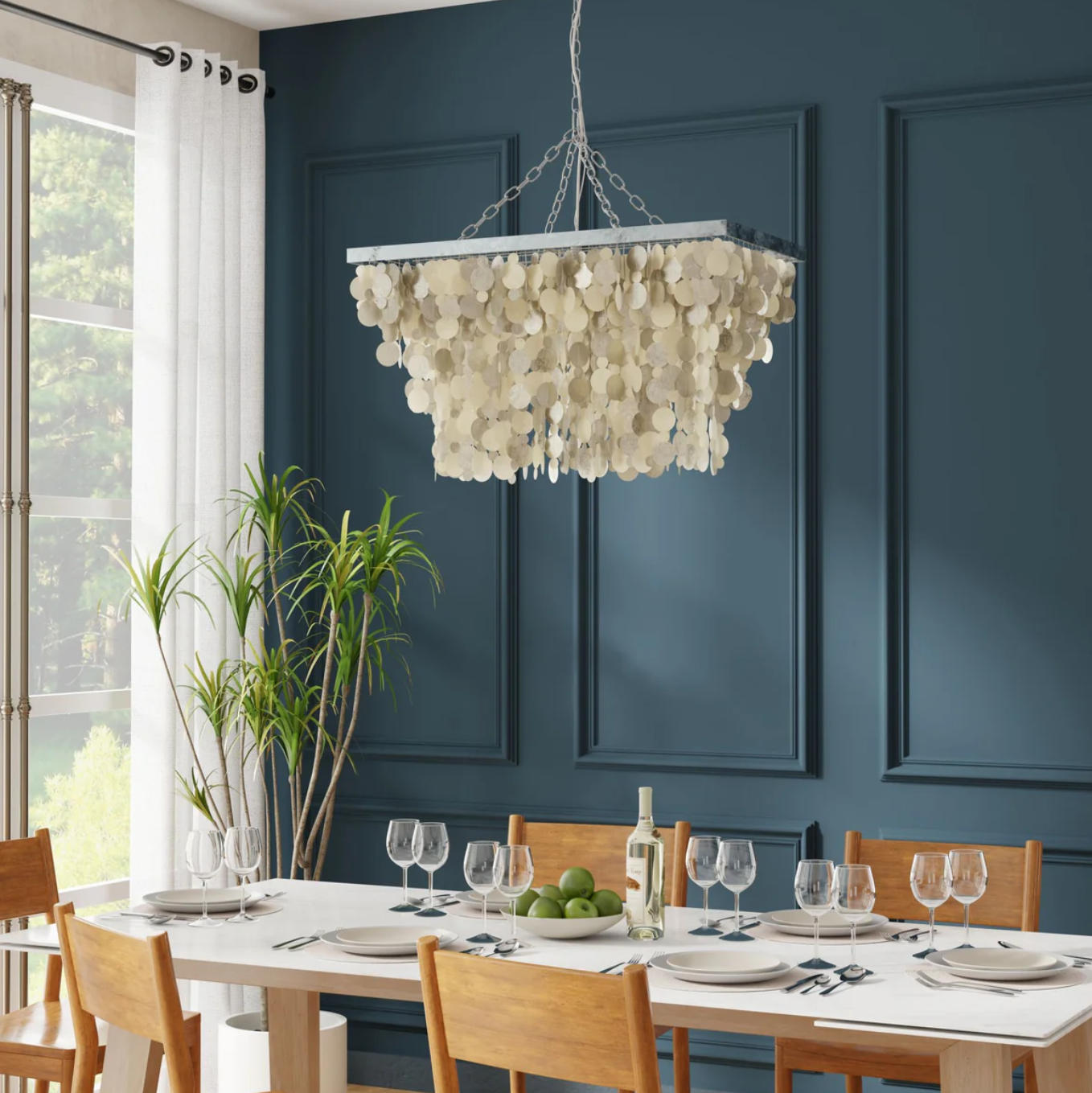
Chandeliers have long been a hallmark of elegance and style in interior design — from crystal and wrought iron to modern LED sculptures. Among these, the capiz chandelier stands out for its unique texture, luminous finish, and organic materials. But as design trends evolve, many people are asking: Is a capiz chandelier outdated in 2026?
This article dives deep into what capiz chandeliers are, their origins, why they became popular, how they fit into various design styles today, and whether they still have a place in modern interiors.
What Is a Capiz Chandelier?
A capiz chandelier is a decorative hanging light fixture that incorporates capiz shells as its primary design element. Capiz shells come from the outer shell of the Placuna placenta oyster — a species found primarily in the Philippines and nearby regions. These shells are prized for their natural translucency and iridescent sheen.
The shells are typically cut into thin plates, polished, and then strung together or mounted within a metal frame to create intricate light fixtures. When illuminated, capiz shell panels diffuse light softly, creating a warm, shimmering glow.
Origin of Capiz Shells and Use in Lighting
Capiz shells have been used for centuries in windows, room dividers, and lanterns in Southeast Asian cultures, appreciated for their ability to let in light while offering privacy. Over time, designers adopted capiz shells in Western decorative lighting, particularly as exotic and coastal aesthetic elements.
The term “capiz” refers specifically to the shell of the Placuna placenta, as outlined in material descriptions such as Wikipedia’s shell article.
The Look & Feel of Capiz Chandeliers
Light Diffusion
Capiz shells softly diffuse light, minimizing harsh glares while providing warm ambiance — a quality highly sought for ambient lighting.
Organic Texture
Unlike crystal or glass, capiz has a subtle, nacreous texture that shifts with viewing angle and light intensity, adding visual interest.
Color & Material
Capiz is primarily off-white or pearlescent but can be dyed or backed with colored materials for different effects.
Common Styles
Capiz chandeliers appear in many forms:
- Tiered shell cascades
- Panel chandelier clusters
- Capiz beads or disks on metal frames
- Drum-style chandeliers with shell insets
Why Capiz Chandeliers Became Popular
Capiz chandeliers gained popularity due to several factors:
- Coastal & Tropical Interiors
Their organic origin and beachy aesthetic meshed perfectly with coastal interiors — a style trend especially strong in U.S. and resort design throughout the 2000s and 2010s.
- Unique Material Identity
Capiz offered an alternative to crystal or glass, resonating with consumers drawn to natural and handcrafted materials.
- Ambient & Decorative Lighting
Interior designers found capiz pendants and chandeliers effective for creating soft, flattering light — particularly desirable in living and dining areas.
These qualities helped capiz chandeliers achieve widespread popularity in décor magazines, hotel lobbies, and upscale tropical residences.
Design Trends 2026: Is Capiz Still In Style?
The short answer: Yes — but with caveats.
Capiz chandeliers are not outdated, but their use has shifted compared to earlier decades.
The design world has evolved toward more nuanced, context-specific applications. Here’s how capiz fits into 2026 design thinking:
Trend 1: Natural & Sustainable Materials Still Strong
Design trends in 2025–2026 strongly emphasize materials with:
- Natural origins
- Sustainable sourcing
- Textural richness
Capiz — being a natural shell material — aligns with biophilic and material-centric design, which remains popular globally. Eco-conscious design principles continue to prioritize tactile, organic materials in interior finishes and lighting. Observers from design authorities like Elle Decor and Architectural Digest note the ongoing significance of natural materials in luxury and residential interiors.
This ongoing trend supports continued relevance for capiz in appropriate contexts.
Trend 2: Context Matters — Capiz Works in the Right Setting
Capiz chandeliers remain stylish when used in spaces that complement their character:
✔ Coastal & Resort Interiors
Capiz feels authentic in seaside homes, beach resorts, and Florida or California-inspired interiors.
✔ Boho & Eclectic Designs
Combined with natural wood, rattan, and woven textures, capiz shell lighting reinforces organic richness.
✔ Transitional Interiors
Modern minimalists sometimes use capiz as an accent material to soften strict minimalism with warmth and texture.
✔ Global & Artisan-Inspired Themes
Spaces that celebrate craft and worldly materials (e.g., Moroccan, Southeast Asian, tropical modern) readily incorporate capiz.
However, capiz may feel out of place in:
- Ultra-modern industrial interiors
- Strictly minimal glass/metal spaces
- Traditional European classical designs
In those settings, more architectural or crystalline chandeliers often perform better.
Trend 3: Integration with Smart & LED Technology
Lighting in 2026 is no longer just static fixtures — it increasingly includes features like:
- Smart home control
- Tunable color temperature
- Dimmable LED modules
Capiz chandeliers have adapted to these trends. Contemporary designs often pair the shells with integrated LED modules behind diffusers, offering:
- Smooth dimming
- Warm to cool light tuning
- Energy efficiency and long life
This modernization ensures that even traditional materials like capiz can thrive in smart homes.
Design Suggestion: Capiz Chandeliers in 2026 Interiors
- Coastal Living Room Statement Light
An oversized capiz chandelier becomes a focal piece in a neutral living room with linen, driftwood, and jute accents.
- Dining Area Ambient Glow
A tiered capiz chandelier over a dining table casts a soft, flattering wash of light, ideal for evening meals.
- Beachfront Entry or Hotel Lobby
Multiple capiz chandeliers create a cascading effect, evoking a tropical shell canopy — a signature design moment.
- Modern Transitional Bedroom
Smaller capiz pendants paired with LED wall sconces make for upscale, personalized lighting without overwhelming the space.
Capiz vs. Crystal: A 2026 Perspective
Crystal chandeliers (like those made from glass or K9 crystal) typically signal formal luxury with bright reflections and sparkle. Capiz, by contrast, leans into:
| Feature | Crystal Chandelier | Capiz Chandelier |
| Light Quality | Bright, sparkling | Warm, diffuse |
| Material | Cut glass/crystal | Natural shell |
| Style Association | Formal elegance | Organic/coastal/boho |
| Visual Impact | High luster & reflection | Soft shimmer & texture |
| Typical Spaces | Formal dining, ballrooms | Casual dining, coastal homes |
Both remain valid design options — the choice depends on aesthetic goals. Capiz is favored when the design calls for softness, natural texture, and warm ambiance rather than showy sparkle.
Sustainability & Ethical Sourcing Considerations
Capiz shells come from natural materials, but modern design discourse also emphasizes ethical and sustainable sourcing. When purchasing a capiz chandelier:
- Consider whether shells are harvested responsibly
- Look for brands using traceable materials
- Avoid suppliers that source illegally or unsustainably
Sustainable sourcing and ethical supply chains matter more in 2026’s environmentally conscious market. Research on sustainability in materials shows that consumers increasingly value eco-responsible design and transparent sourcing.
Care & Maintenance of Capiz Chandeliers
Due to their shell components, capiz chandeliers do require some specific care:
- Avoid harsh chemicals: Use a soft, dry cloth or mild soap solution
- Minimize moisture exposure: Especially if not sealed or damp-rated
- Check fixture rating: Ensure appropriate IP or rated use in bathrooms or humid areas
Capiz delicacy is part of its charm — but proper care ensures longevity.
Is a Capiz Chandelier Outdated in 2026?
No — but context is key.
A capiz chandelier is not considered outdated; rather, it is stylish when used appropriately. Its continued relevance depends on:
✔ Matching the design theme
✔ Using modern LED/Smart components
✔ Balancing texture with contemporary materials
✔ Respecting scale, placement, and lighting function
In 2026, interior trends favor materials that provide warmth, texture, and a sense of well-being — all qualities that capiz naturally offers.
Choosing the Right Capiz Chandelier for Your Space
- Assess Room Function
For task-intensive areas (kitchens, vanity zones), complement with focused lighting. Use capiz primarily for ambient or decorative effect.
- Match Scale to Ceiling Height
Larger, tiered capiz chandeliers suit high ceilings. Smaller pendants work well in bedrooms or dining nooks.
- Combine Materials Thoughtfully
Pair capiz with metal or wood for contrasting warmth and structure.
- Consider Smart Lighting Integration
Choose fixtures that accommodate dimming, tunable whites, and remote control to future-proof your lighting.
Final Thoughts
The capiz chandelier is still very much in style in 2026 — but its relevance depends on thoughtful application. As design philosophies shift toward organic, texture-rich, and sustainable interiors, capiz offers a unique and warm lighting alternative to glass and crystal. When integrated with modern lighting technology and placed in the right context, a capiz chandelier becomes far more than a decorative relic — it becomes a timeless, adaptable design piece.
Whether you’re decorating a coastal retreat, a contemporary home, a transitional space, or a boutique hospitality environment, capiz chandeliers can continue to illuminate your spaces beautifully in 2026 and beyond.
Leave a Reply