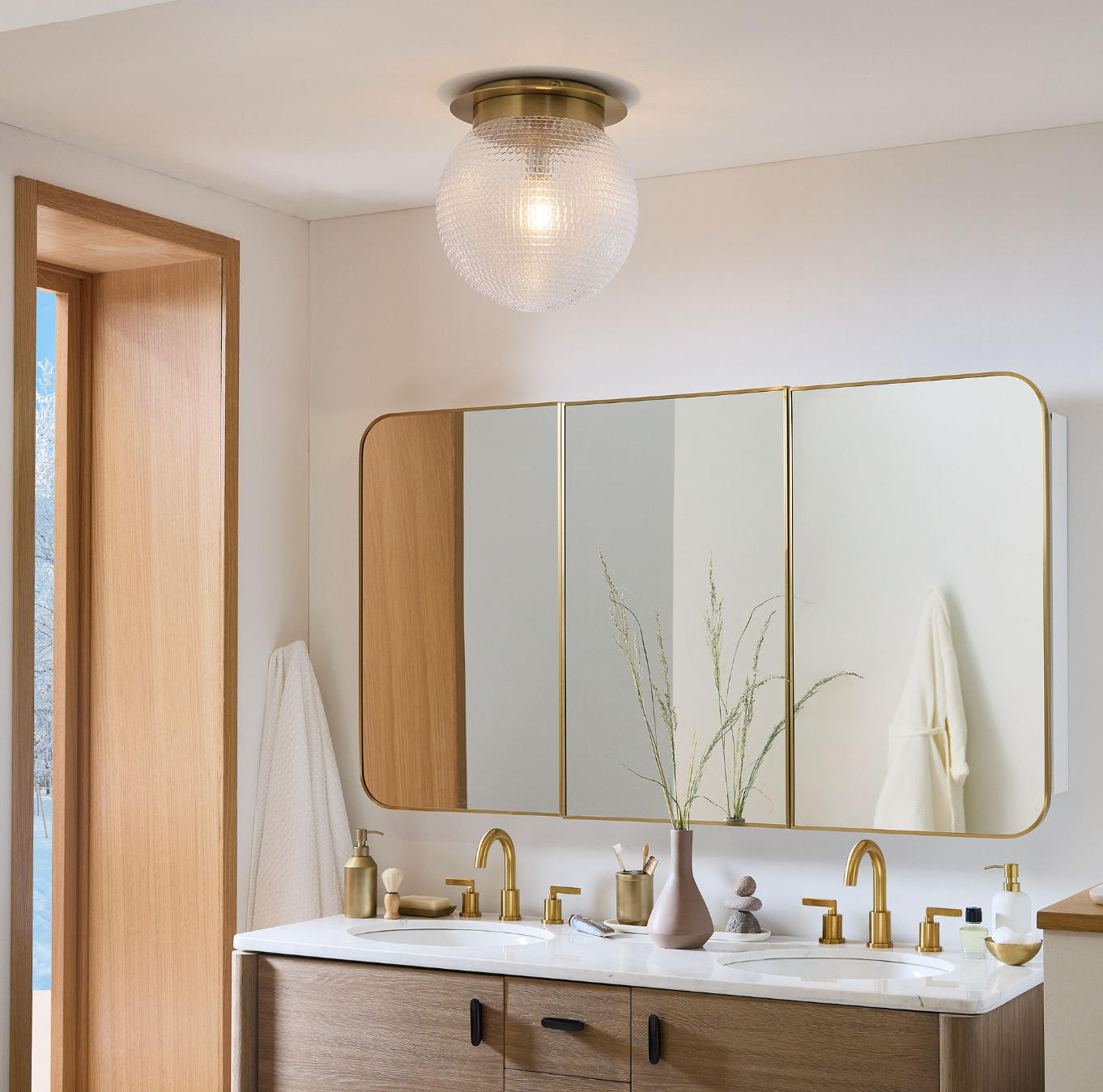
Choosing the right ceiling light for bathroom is more than just a design decision — it impacts safety, function, mood, and daily routines. Bathrooms present a unique lighting challenge: they must provide bright, even illumination for grooming tasks while also supporting relaxation and ambiance. As we head into 2026, bathroom lighting trends are evolving with smarter technology, energy efficiency, improved safety standards, and stylish integration with contemporary interiors.
This guide explores the best ceiling lights for bathrooms, emerging trends, installation tips, and what lighting specs you should prioritize in your next upgrade.
Why Bathroom Ceiling Lighting Matters
Bathroom lighting significantly affects how a space feels and functions. Inadequate or poorly placed lighting can lead to shadows, insufficient task lighting, and potentially unsafe conditions, especially in wet areas.
According to the Illuminating Engineering Society (IES), proper lighting design enhances both visual performance and comfort in any space — and bathrooms are no exception. Whether it’s shaving, makeup application, or creating a relaxing zen bath environment, ceiling lighting influences both safety and experience.
Industry Standards & Safety: What You Need to Know
Before we dive into trends, it’s important to cover lighting safety:
- IP Rating (Ingress Protection):
Bathroom fixtures should have appropriate IP ratings to indicate protection against moisture and water splash (e.g., IP44 or higher near wet zones). This ensures safety and code compliance. - Wet vs. Damp Ratings:
A wet-rated ceiling light can safely operate where it may directly receive water (e.g., shower area). Damp-rated fixtures are suitable for general bathroom areas. Always check local electrical code requirements. - Voltage and insulation:
Bathroom lights should be installed according to building codes, especially when they are close to water sources.
For more on IP ratings and fixture suitability, see the Wikipedia description of Ingress Protection ratings.
Top Ceiling Light Trends for Bathroom in 2026
1. Integrated LED Ceiling Lights
LED technology continues to dominate bathroom ceiling fixtures in 2026. LEDs offer:
- High energy efficiency — up to 90% less energy use compared to traditional incandescent bulbs
- Long lifespan — 25,000+ hours typical
- Low heat emission — important for closed bathroom spaces
According to the U.S. Department of Energy, LED lighting remains the most efficient choice for residential applications, including bathrooms.
Modern integrated LED ceiling lights often come with:
- Dimmable control
- Tunable white (warm to cool color temperature)
- Very low profiles that suit modern minimal aesthetics
Why it matters in 2026: Integrated LEDs reduce maintenance and integrate seamlessly with smart home systems.
2. Low-Profile & Flush Mount Designs
Flush mount and semi-flush mount ceiling lights remain top picks for bathrooms. They sit close to the ceiling, making them ideal for:
- Lower ceilings
- Small bathrooms
- Minimalist interiors
Today’s designs include sleek rings, diffused panels, or geometric forms that blend with ceiling planes. They often incorporate frosted acrylic or opal glass diffusers that soften light evenly.
Trend Insight: Minimal and clean fixtures work with the broader 2026 design shift toward “quiet luxury” bathrooms — spaces that feel elegant without overt ornamentation.
3. Smart & Connected Bathroom Ceiling Lights
Smart lighting is no longer niche. In 2026, more ceiling lights for bathrooms include:
- App control
- Voice activation (via Alexa, Google Home)
- Circadian lighting routines
Smart ceiling lights can adjust color temperature and brightness automatically — warm light for relaxation and brighter, cooler light for grooming. According to Houzz trend reports, smart fixtures rank high on homeowner upgrade lists.
4. Layered Lighting: Ambient + Task + Accent
Bathroom lighting is evolving from a single ceiling fixture to a layered system that includes:
- Ceiling ambient light (general illumination)
- Task lighting (vanity lighting, mirror lights)
- Accent lighting (niches, shelves, coves)
A well-designed ceiling light combines with vanity and accent lights to create depth and eliminate shadows. Modern guides from architectural lighting sources emphasize layered design as a key to functional spaces.
5. Decorative & Sculptural Ceiling Fixtures
While recessed and flush mounting remain practical, 2026 sees more decorative ceiling fixtures in bathrooms. These include:
- Sculptural rings
- Minimal chandeliers for high-ceiling baths
- Texture-accented designs (metal, wood, stone accents)
These add personality while maintaining safety compliance.
How to Choose the Best Ceiling Light for Bathroom
1. Focus on Light Output (Lumens)
In general, aim for:
- General ambient lighting: 2000–3000 lumens for an average bathroom
- Task areas (around vanity or mirror): extra task lights or brighter bulbs
Brightness needs vary by room size, ceiling height, and fixture layout.
2. Pick the Right Color Temperature
Color temperature affects how we see color and skin tones.
- 2700–3000K (warm white): relaxing, spa-like ambiance
- 3500–4000K (neutral/cool): ideal for grooming and makeup
Experts often suggest combining warm ambient lighting with neutral/cool task lighting for the best result.
3. Consider Fixture Placement
The ideal layout often includes:
- A central ceiling fixture for general light
- Focused lights near vanity/mirror
- Optional accent lights (under cabinets, niches, shelves)
Placement should avoid harsh top-down shadows that can interfere with grooming tasks.
4. Look for Easy-to-Clean Designs
Bathrooms are humid and can attract dust or condensation. Choose ceiling lights with:
- Smooth diffusers
- Sealed designs (to avoid moisture intrusion)
- Materials suited for cleaning (glass, acrylic, sealed metal)
Best Ceiling Light Styles for Bathroom in 2026
Here are some of the most recommended ceiling light styles for bathrooms:
Trend 1: Slim LED Disc Lights
These low-profile fixtures offer even light and are ideal for modern bathrooms. They often come in:
- Warm/neutral tunable options
- Dimmable features
- Sleek designs that blend with ceilings
Great for small to medium bathrooms.
Trend 2: Linear LED Panels
Linear panels deliver uniform light with a contemporary aesthetic. They work well in:
- Wider bathrooms
- Spaces with multiple zones
- Combining with accent lighting
Trend 3: Recessed LED Downlights
Recessed LED downlights (can lights) offer:
- Clean ceilings
- Targeted light placement
- Combination options with smart tech
When spaced correctly, downlights can eliminate shadows and provide bright, comprehensive coverage.
Trend 4: Integrated Mirror + Ceiling Lighting
Some 2026 designs integrate ceiling fixtures with mirrors or vanity panels to create unified, stylish lighting systems that reduce shadows and enhance grooming light.
Trend 5: Sculptural Decorative Ceiling Fixtures
For bathrooms with high ceilings, decorative fixtures — often in metal, geometric, or mixed material designs — make a visual statement while delivering ambient light.
Sustainability & Energy Considerations
LED Efficiency
LED lighting is now the default choice for energy efficiency. The U.S. Department of Energy identifies LED lighting as one of the most energy-efficient lighting options for residential use.
LEDs can reduce energy use by up to 75–90% compared with traditional bulbs, making them ideal for spaces used multiple times a day like bathrooms.
Longevity & Maintenance
LED ceiling lights have longer lifespans and lower maintenance than incandescent or fluorescent options — important in bathrooms where bulb replacement can be cumbersome.
How to Install Bathroom Ceiling Lighting (Basics)
While professional installation is always recommended, here’s a quick checklist based on industry best practices:
- Ensure correct IP rating — match the fixture with the area’s proximity to water.
- Check power and wiring compliance — local codes may dictate certain box types or GFCI circuit protection.
- Spacing rules — allow even light coverage, avoiding shadows.
- Height and beam angle — balance ambient and task light, especially near mirrors.
Always consult local electrical code and consider a licensed electrician for installation.
Common Mistakes to Avoid
❌ Choosing Too Cold Light (High Kelsvus)
Ultra cool lighting (>4000K) can feel harsh and unflattering for bathroom spaces. Neutral or warm tones are preferred.
❌ Ignoring IP Ratings
Using non-rated fixtures near wet areas can risk electrical hazards.
❌ Skipping Task Lighting Around Vanity
Relying solely on ceiling lights can create shadows while grooming; proper task lights near mirrors are essential.
Bathroom Lighting Examples: 2026 Case Studies
Luxury Spa Retreat Bathroom
- Central integrated LED disc
- Adjustable color temp controls
- Accent niches with waterproof LED strips
Family Bathroom
- Recessed LED downlights
- Central bright ambient panel
- Vanity lighting with tunable white temperature
Modern Apartment Bath
- Sleek slim panel ceiling light
- Smart dimming via app
- Backlit mirror integration
Each of these scenarios leverages ceiling lights as part of a layered lighting plan.
Conclusion: Best Ceiling Light for Bathroom in 2026
Bathrooms in 2026 are no longer limited to functional lighting — they are curated experiences. The best ceiling light for bathroom:
- Integrates energy-efficient LEDs
- Offers tunable light temperature
- Matches the space’s scale and style
- Meets safety standards (IP ratings)
- Contributes to layered lighting
From slim LED discs and recessed downlights to sculptural fixtures and smart tunable systems, ceiling lighting now elevates both form and function.
Whether you’re renovating, building new, or simply updating your bathroom lighting, choosing the right ceiling fixture can transform everyday routines into better daily experiences.
Leave a Reply